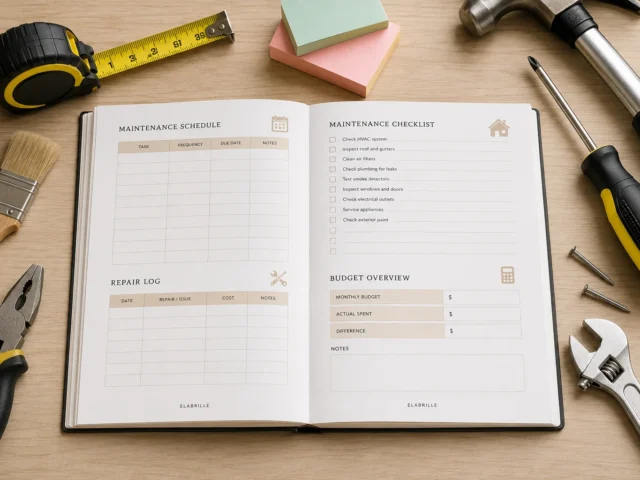
Ever wonder why your neighbor’s twenty-year-old house looks better than your five-year-old one? It usually comes down to a handful of small mistakes, repeated over and over, until they add up to a real bill. That’s what good home maintenance tips are really about — not grand renovations, but avoiding the little slip-ups that quietly cost you lakhs over the years.
I’ve made most of these mistakes myself, honestly. Ignored a small leak for six months because it “wasn’t that bad.” Turns out it was bad enough to warp a section of flooring by the time I got around to it. This article walks through the most common — and most expensive — home maintenance mistakes, and what to do instead. Some of it might sting a little if you recognize yourself in it. That’s fine. Better to sting now than pay for it later.
Ignoring Small Leaks Until They Become Big Problems
This is probably the number one mistake on any list of home maintenance tips, and for good reason — water damage is sneaky, slow, and expensive.
Direct answer: Ignoring small leaks is the costliest home maintenance mistake because water damage compounds over time — a ₹500 tap fix delayed for months can turn into a ₹40,000+ repair involving flooring, wiring, or even structural damage.
Here’s the thing about leaks — they rarely announce themselves loudly. A dripping tap loses roughly 15-20 litres of water a day, which sounds minor until you calculate that over a year. A slow pipe leak inside a wall might not show any visible sign for months, until suddenly there’s a damp patch, peeling paint, or worse, a mold smell you can’t quite locate.
I’ve noticed people tend to rationalize leaks: “it’s just a small drip,” “I’ll fix it next weekend.” Weeks turn into months. And by the time it’s addressed, you’re not just fixing a tap — you’re repainting a wall, replacing warped skirting, sometimes even dealing with an electrician because water’s crept near a switchboard.
A few practical points:
- Check under sinks and around toilets every couple of months — takes two minutes, genuinely.
- If your water bill jumps without an obvious reason, that’s a red flag worth investigating immediately.
- Don’t just patch a leak with tape or a temporary fix and forget about it — I’ve done this, and it always resurfaces at the worst time.
- Get a plumber for anything behind walls or under flooring; DIY attempts here often make things worse.
Skipping HVAC and Appliance Servicing
Air conditioners, geysers, refrigerators — we treat them like they’ll just run forever until they suddenly don’t. This is one of the most avoidable items on any home maintenance tips checklist.
A dirty AC filter, for instance, can increase your electricity consumption by 20-30%. That’s not a small number when you’re running two or three units through an Indian summer. Multiply that across months and you’re looking at thousands of extra rupees, just from skipped filter cleaning.
Geysers are another classic offender. Sediment builds up inside the tank over time, especially with hard water, which is common in a lot of Indian cities. That sediment makes the geyser work harder to heat water, which means higher bills and a shorter appliance lifespan. A geyser that should last 8-10 years might conk out in 5 or 6 simply because nobody flushed the sediment out annually.
Refrigerators too — dusty condenser coils at the back make the compressor work overtime. Takes fifteen minutes to vacuum them out, and it genuinely extends the machine’s life.
[link to related guide about seasonal home maintenance checklist here]
Servicing costs money upfront, sure. But compare ₹500-800 for annual AC servicing against ₹15,000+ for a compressor replacement, and the math isn’t really close.
DIY Electrical Work Gone Wrong
This one’s less about money lost slowly and more about money lost all at once — sometimes along with real safety risk.
I get the appeal, I really do. YouTube makes everything look simple, and calling an electrician for a small switch replacement feels like overkill. But electrical work has a way of punishing overconfidence. A loose connection, incorrect wiring gauge, or a badly done splice doesn’t always fail immediately — it can sit there for months before it causes a short circuit or, worse, a fire.
Some genuinely reasonable boundaries here:
- Replacing a light bulb or a simple switch plate — fine, go ahead.
- Rewiring a room, installing a new circuit, or working near your main panel — not fine, call a licensed electrician.
- Anything involving the earthing or grounding system — absolutely not a DIY job, this is a safety-critical component.
A friend of mine in Jaipur tried to install extra points for a home office setup himself, to save on the electrician’s fee. Saved maybe ₹1,500. Six months later, a short circuit damaged two appliances plugged into that circuit — cost him nearly ₹18,000 in repairs, not counting the inverter battery that also got affected. Not exactly the savings he was going for.
Neglecting Roof and Terrace Waterproofing
Here’s an uncomfortable truth — most people only think about their roof when it’s already leaking. By then, you’re not doing preventive home maintenance, you’re doing damage control, and damage control always costs more.
Waterproofing typically needs reapplication every 3-5 years, depending on the material used and how harsh your local monsoon is. Skip it, and water finds its way into hairline cracks you didn’t even know existed. Once water gets under the surface layer, it doesn’t just sit there — it spreads, weakens the concrete, and eventually shows up as damp patches on your ceiling, sometimes rooms away from where the actual leak started.
I’ll admit I disagree with contractors who push full waterproofing redos every single year “just to be safe” — that’s often unnecessary and just adds cost. A proper inspection first, patch the trouble spots, and a full redo only when it’s genuinely needed. Most terraces don’t need annual full treatment; they need annual inspection.
Related reading: Home Maintenance Checklist: What To Do Every Season
Rough cost comparison: a full terrace waterproofing job for an average home might run ₹40,000-70,000. Catching and patching small cracks early? Often under ₹5,000. That gap is basically the entire argument for staying on top of it.
Overlooking Pest Control Until Infestation Hits
Termites are the quiet villains of home maintenance. They work inside wood and structures where you can’t see them, and by the time damage is visible, it’s often extensive.
Direct answer: Skipping regular pest control is a costly home maintenance mistake because termite and pest damage develops silently — a small preventive treatment costing ₹2,000-4,000 can prevent structural repairs that run into lakhs once an infestation is established.
Wooden furniture, door frames, even structural beams in older homes are vulnerable. I know someone who discovered termite damage in a wooden almirah only when a shelf collapsed — turned out the infestation had been active for well over a year, spreading quietly to a nearby door frame too.
Preventive pest control every 6-12 months isn’t glamorous spending, but compare it to replacing termite-damaged furniture or structural wood, and it’s not even close.
Delaying Paint and Exterior Maintenance
People treat exterior paint as purely cosmetic — something you do when the house “looks old.” But paint is actually a protective layer, not just decoration, and that distinction matters more than most homeowners realize.
Once paint starts cracking or peeling, the wall underneath is exposed to moisture, UV damage, and temperature swings. This accelerates deterioration of the plaster and, eventually, the structure itself. What starts as a cosmetic issue becomes a structural one if ignored long enough.
A few numbers worth knowing:
- Repainting exteriors every 5-7 years is a reasonable interval for most Indian climates.
- Delaying it by even 2-3 years past that point often means plaster repair work gets added to the bill, not just paint.
- Cheap, low-quality paint might save 20-30% upfront but often needs redoing in half the time — false economy, in my opinion.
Ignoring Drainage and Gutter Cleaning
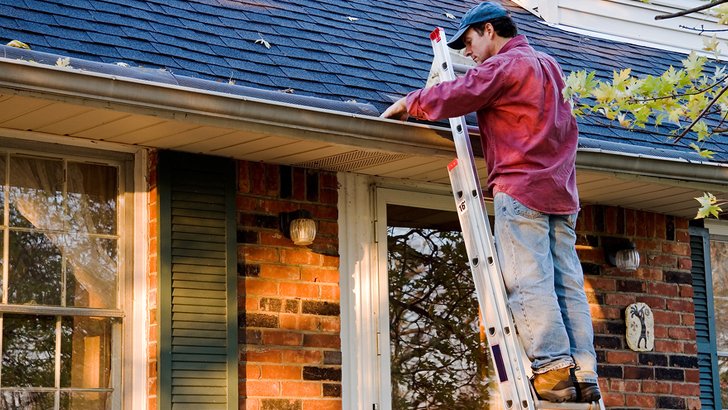
This mistake doesn’t get talked about enough, and it’s one of the cheapest to prevent. Clogged gutters and drains cause water to pool where it shouldn’t — near foundations, on terraces, around window frames.
Over time, that standing water seeps into places it has no business being. Foundation dampness, in particular, is expensive and difficult to fix once it sets in — we’re talking structural underpinning work in severe cases, which can run into several lakhs.
Cleaning gutters and checking drainage twice a year — before and after monsoon — takes maybe an hour. It’s genuinely one of the highest-value, lowest-effort items on any home maintenance list.
[link to related guide about monsoon-proofing your home here]
FAQ: Home Maintenance Tips People Search For
What’s the most expensive home maintenance mistake homeowners make? Ignoring water leaks, hands down. They start small and cheap to fix, but left alone, they cause damage to flooring, walls, wiring, and sometimes the structure itself — turning a ₹500 problem into a ₹40,000 one.
How often should I service my home appliances to avoid costly repairs? AC units should ideally be serviced before summer and once mid-season if used heavily. Geysers once a year, refrigerators every six months for coil cleaning. It’s a small recurring cost that prevents much bigger appliance failures.
Is it cheaper to DIY home repairs or hire a professional? Depends entirely on the job. Small cosmetic fixes — sure, DIY away. Anything electrical, structural, or involving waterproofing is usually cheaper long-term with a professional, because mistakes there tend to cascade into bigger costs.
How can I tell if I have a hidden water leak? An unexplained jump in your water bill, damp patches that appear and disappear, a musty smell in one area, or paint bubbling on a wall are all signs worth investigating before they become visible damage.
What home maintenance tasks give the best return for the money spent? Gutter cleaning, AC filter maintenance, and annual leak inspections. All three are cheap, quick, and prevent some of the most expensive repair categories out there.
Does skipping home maintenance actually affect my home’s resale value in 2026? Yes, quite a bit. Buyers and inspectors in 2026 are increasingly detail-oriented, and visible neglect signals hidden problems even when there aren’t any — it affects negotiating leverage more than people expect.
Conclusion
Most expensive home repairs don’t start as emergencies — they start as small things people put off. A dripping tap. A dirty filter. A hairline crack on the terrace. None of it feels urgent in the moment, and that’s exactly the trap. These home maintenance tips aren’t complicated; they just require a bit of consistency instead of waiting for a crisis.
Pick one thing from this list you’ve been putting off — check under your sink, clean an AC filter, whatever it is — and just do it this week. Not because it’s an emergency, but because it won’t be one if you catch it now.