That damp patch on your bedroom ceiling that shows up every monsoon and then quietly fades away by October — sound familiar? A lot of homeowners live with this cycle for years, assuming it’s normal. It isn’t, and it’s usually one of the clearest roof repair signs you’ll get, even if it doesn’t feel urgent in the moment. The tricky part isn’t spotting that something’s wrong. It’s figuring out whether you’re looking at a ₹5,000 patch job or a full ₹2-lakh replacement.
I’ve walked a few relatives through exactly this decision over the years, and the honest answer is: it depends on more than just how bad the damage looks right now. Let’s break down what actually matters.
Water Stains and Ceiling Leaks
This is usually the first thing people notice, and for good reason — it’s hard to miss a brown, spreading stain on white paint. But here’s what most people get wrong: a stain doesn’t tell you how bad the underlying damage is. Sometimes it’s a small crack. Sometimes it’s a much bigger structural issue that’s been building for months.
Quick answer: Water stains or active drips from your ceiling are among the earliest roof repair signs, and they need attention within days, not months — even a small leak can quietly damage insulation, wood framing, and electrical wiring hidden above the ceiling.
A few things worth checking once you spot a stain:
- Is it appearing in the same spot every monsoon, or is it new this year?
- Does the stain feel damp to the touch, or has it dried and just left discoloration?
- Is there any sagging in the ceiling near the stain — that’s a more serious sign, and I’d treat it urgently
One thing I’ve noticed with older independent houses in Rajasthan specifically — flat concrete roofs develop hairline cracks over years of heat expansion and contraction, and these cracks are often invisible until the first heavy rain finds them.
Missing, Cracked, or Curling Roof Tiles
If you’ve got a sloped, tiled roof, this one’s fairly easy to spot from the ground with a good pair of binoculars — you don’t necessarily need to climb up there yourself, and honestly, I wouldn’t recommend it unless you know what you’re doing.
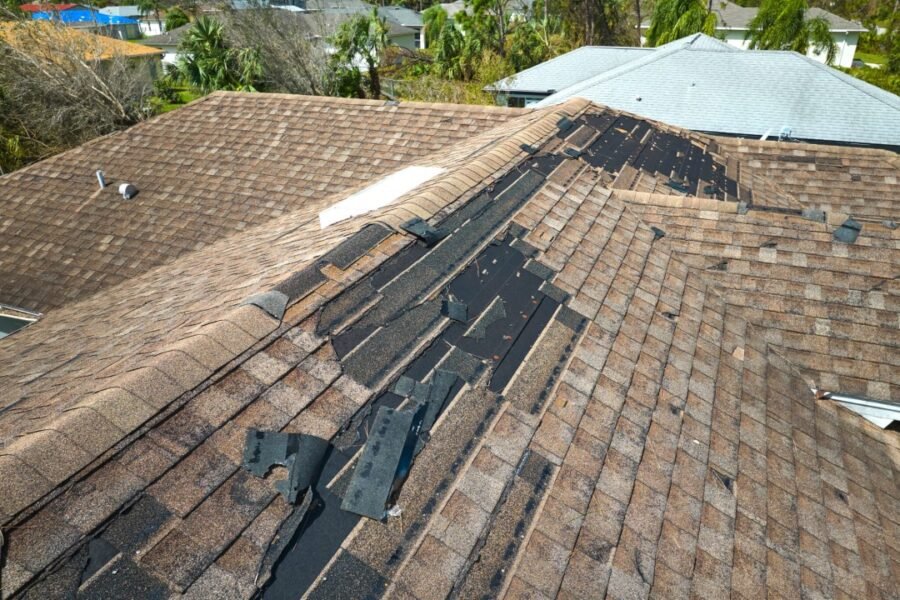
Look for tiles that are cracked, chipped, or curling at the edges. A single cracked tile isn’t a crisis. But if you’re seeing this pattern across a large section of the roof, that usually means the tiles have simply aged out and started failing as a batch, not individually.
Common causes worth knowing:
- Sun and heat exposure over years causes tiles to become brittle, especially in regions with intense summers
- Poor quality tiles from the original construction — this happens more often than builders like to admit
- Physical damage from fallen branches, hailstorms, or someone walking on the roof carelessly during maintenance
Replacing a handful of damaged tiles is a relatively small job. Replacing tiles across the entire roof, though, starts approaching the cost of other repair options, so it’s worth getting a proper quote rather than assuming it’s a “small fix.”
Sagging Roof Deck or Visible Dips
This is one of the more serious roof repair signs, and not something to sit on. A roof that looks like it’s dipping or sagging in a particular section usually points to structural weakness underneath — rotting wood, water-damaged supports, or in older buildings, deteriorating concrete.
Has anyone ever told you “it’s just settling, it’s fine”? Be careful with that advice. Some settling is normal in older structures, sure. But a visible dip that’s gotten noticeably worse over a year or two is not something to explain away.
If you notice sagging, get a structural engineer or an experienced contractor to assess it before doing anything else — this isn’t a DIY patch situation, and trying to fix the surface without addressing what’s underneath just delays the real problem.
Granule Loss on Shingles (For Sloped Roofs)
Less common in most Indian residential construction, but relevant for homes with asphalt shingle roofing, which has become more popular in newer bungalow-style construction over the last decade or so.
Check your gutters and the ground around your house after rain. If you’re finding a noticeable amount of small, sand-like granules collecting there, your shingles are wearing down. This isn’t an emergency on its own, but it’s a clear signal the roof’s protective layer is thinning, and replacement is probably a few years out rather than a few decades.
Daylight Visible Through the Roof (Attic or Loft Check)
If you’ve got an attic or loft space, this is genuinely one of the easiest checks you can do yourself. Go up during the day, turn off any lights, and look up. If you see pinpricks of daylight coming through anywhere, that’s a gap water can get through too.
This one surprises people because it feels almost too obvious. But it’s exactly the kind of thing that gets missed for years simply because nobody thinks to check.
Small gaps can sometimes be sealed. Larger sections letting in daylight usually mean the underlying material has degraded enough that patching won’t hold for long — you’re looking at a proper repair job at minimum.
Related reading: Roofing Materials Compared: Which One Is Right for You?
Increased Energy Bills Without Obvious Cause
This one’s easy to overlook because it doesn’t look like a roofing problem at all. But a roof that’s lost its insulating properties — whether from age, damage, or poor original installation — lets heat in during summer and out during winter, making your AC and heating work harder than they should.
If your electricity bills have crept up over a year or two with no real change in usage habits, and you’ve already ruled out obvious culprits like an old AC unit, it’s worth adding the roof to your checklist. It’s not always the first suspect, but it’s a real one.
[link to related guide about home insulation and energy efficiency here]
How Old Is Your Roof? Age Matters More Than You’d Think
Picture a small business owner in Jaipur running a warehouse with a roof that’s now pushing 22 years old. He’d been patching leaks every monsoon for the last four years, spending roughly ₹15,000-₹20,000 annually on repairs. When he finally got a proper assessment, the contractor pointed out he’d already spent close to the cost of a partial replacement — just spread out in smaller, recurring bills that felt less painful individually.
Quick answer: Most residential roofs in India, depending on material and maintenance, last 15-25 years before requiring full replacement rather than ongoing repairs. If your roof is approaching or past this range and repair costs keep recurring annually, replacement is usually the more economical choice long-term.
A rough general guide by material:
- RCC flat roofs: 25-30 years with proper waterproofing maintenance, sometimes longer
- Clay tile roofs: 15-20 years before significant tile replacement is needed
- Asphalt shingle roofs: 15-20 years depending on climate exposure
- Metal sheet roofing: 20-30 years, though rust and coating wear matter more than age alone
Repair or Replace? How to Actually Decide
This is the question everyone’s really asking, so let’s address it directly instead of dancing around it.
As a rough guideline, if repair costs are creeping above 30-40% of what a full replacement would cost, replacement usually makes more financial sense — you’re not just delaying the inevitable, you’re paying more overall to do it in installments.
A few other factors worth weighing:
- How many separate issues are you dealing with? One leak is a repair. Five different problem areas across the roof is starting to look like replacement territory.
- How long do you plan to stay in the house? If you’re selling in a year or two, a full replacement might not be worth it — a solid repair could be the more sensible call.
- Has the roof already been repaired multiple times in the same spot? Recurring failures in the same area usually mean the underlying structure is compromised, not just the surface.
[link to related guide about waterproofing your roof before monsoon here]
FAQ
Q: How do I know if my roof needs repair or full replacement? Look at the extent and pattern of damage. Isolated leaks or a few cracked tiles usually mean repair. Widespread issues, sagging, or a roof over 20 years old with recurring problems usually point toward replacement being the smarter long-term choice.
Q: How much does roof repair cost in India? Minor repairs like sealing cracks or fixing a few tiles typically range from ₹3,000-₹15,000 depending on the extent of damage. Larger repairs involving waterproofing an entire section can run ₹20,000-₹60,000 or more.
Q: How long does a roof usually last before needing replacement? Most Indian residential roofs last 15-30 years depending on material — RCC flat roofs tend to last longest with proper maintenance, while tile and shingle roofs typically need replacement sooner.
Q: Can I repair a roof leak myself? Small, surface-level cracks can sometimes be sealed with waterproofing compounds available at hardware stores. Anything involving structural elements, sagging, or recurring leaks really needs a professional assessment first.
Q: What’s the best time of year to repair or replace a roof in India? Late winter to early summer, before monsoon season starts, is generally the ideal window. Trying to do major roof work during heavy rains is difficult and often less effective.
Q: Does home insurance cover roof repair or replacement? It depends on your policy and the cause of damage. Sudden events like storm damage are more commonly covered than gradual wear and tear, so it’s worth checking your specific policy terms before assuming coverage.
Conclusion
Most roofing problems don’t start as emergencies — they start as small roof repair signs that get ignored until monsoon forces the issue. Water stains, cracked or missing tiles, sagging sections, and a roof that’s simply gotten old are all worth acting on before the damage spreads or the next heavy rain finds every weak spot at once.
If your roof is showing even one or two of these signs, don’t wait for the next monsoon to deal with it. Get a proper inspection done now, while you’ve still got time to choose between a repair and a replacement — rather than being forced into a rushed decision mid-storm.